Commercial Waste in Mortlake
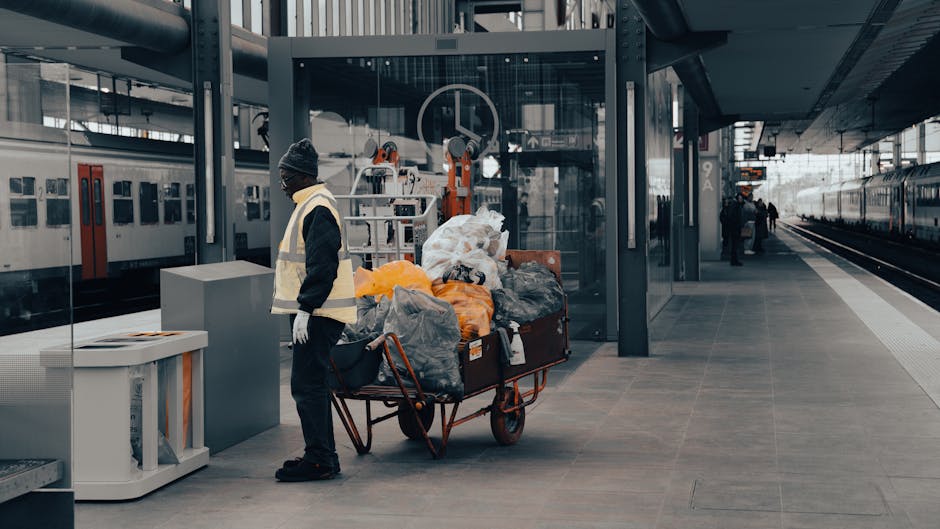
Commercial waste in Mortlake needs a service that is organised, lawful and suited to the kind of premises generating the material. We handle routine and one-off collections for workplaces that want waste removed without disrupting trading hours, from offices and shared premises to shops, hospitality sites and light industrial units. The focus is on separating reusable, recyclable and residual waste where possible, then moving it on in a way that supports tidy premises and clearer waste handling.
Our commercial waste removal service is designed for businesses that need a practical way to deal with general refuse, packaging, old fixtures, obsolete stock and other non-hazardous materials. We can also support linked clearances where items need to be taken away carefully rather than simply tipped into a general bin, such as furniture, office contents or mixed bulky waste. If you need a straightforward quotation, you can start by getting in touch with the team and describing the type of waste you want removed.
For businesses that need to plan around opening times or limited access, the most useful details are usually the access point, the approximate volume, the material type and whether any items need to be dismantled before removal. Clear information helps us suggest a sensible approach and reduces the risk of delays on site. If your premises produce different waste streams, it can also help to separate anything that is confidential, recyclable, fragile or unusually heavy before collection day.
General business waste removal
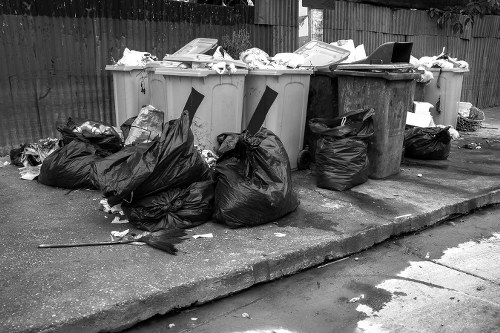
General business waste removal covers the everyday material that builds up in commercial premises: mixed rubbish, packaging, bags of refuse, outdated paperwork that is not confidential, broken small items and other non-hazardous waste that no longer needs to stay on site. The aim is to clear it efficiently and leave the area ready for normal use. For many businesses, the main benefit is having a single clear route for disposal instead of trying to manage scattered bins, ad hoc storage or overloaded internal waste points.
We also help where waste is mixed rather than neatly sorted. In those cases, the practical questions are usually whether anything can be separated for recycling, whether bulky items need to be removed first and whether access will affect loading. Materials should be identified honestly, especially if there is any doubt about electrical items, sharp components or substances that may need a different treatment. If you are comparing options, it is useful to look at the type of load rather than only the amount.
For common disposal needs, these service pages may help you identify the right route: waste removal for broader household and commercial clearances, business waste removal for regular workplace waste, and pricing and quotes if you want to understand the information typically needed for a quotation. Each page covers a different part of the process, so it can be easier to match the service to the material before you book.
Office, retail and workspace clearances
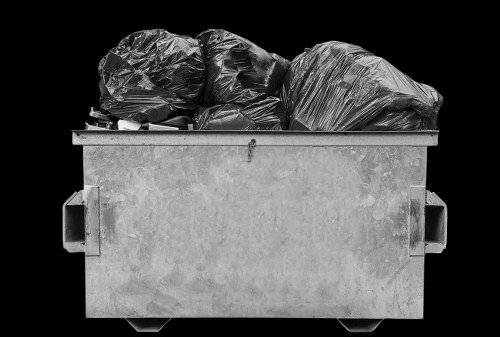
Office and workspace clearances are often less about rubbish alone and more about taking away the items that no longer fit the way a room is used. That may include desks, task chairs, filing units, shelving, meeting tables, reception furniture, storage cupboards and mixed office clutter. In a retail setting, it may also involve packaging, display fixtures, old point-of-sale furniture or stock that is no longer needed. A careful approach matters because these items can be awkward to move through narrow entrances, lifts or shared corridors.
Planning around access is especially helpful when the clearance involves multiple floors, limited parking or items that need partial dismantling. A clear inventory of the larger pieces allows the removal to be arranged more sensibly, while a note about fragile or confidential items helps prevent unnecessary handling. If certain items should remain in place, or if the work must be done outside core business hours, that should be explained early so the collection can be arranged around the site’s normal routine.
If office or retail waste is your main concern, the following pages may be relevant: office clearance for workplace furniture and contents, furniture clearance for loose items and room contents, and confidential shredding where sensitive paperwork needs separate handling. Those services can overlap, but they are not identical, so it helps to choose the nearest fit to the material you actually need removed.
Bulky items and furniture disposal
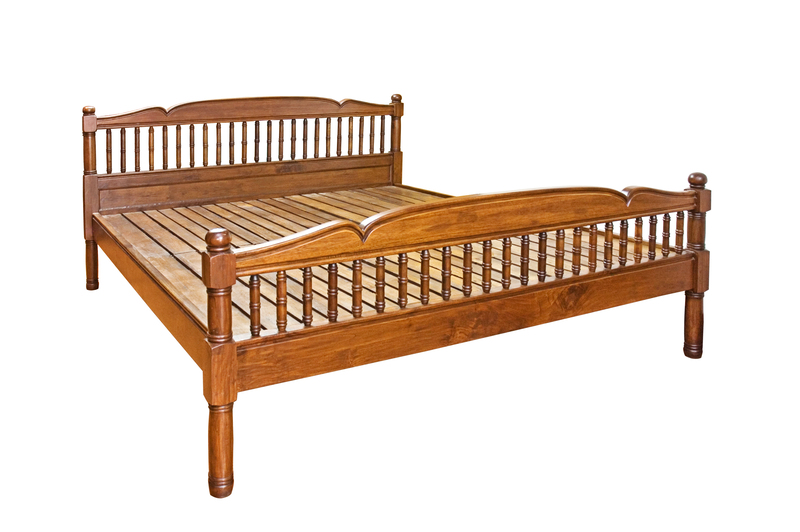
Bulky items are common in commercial waste collections because businesses often need to replace worn furniture, damaged fixtures or redundant storage. Sofas, armchairs, reception seating, cabinets and similar items are not always suitable for standard bins, especially when they are too large to move without assistance. Furniture disposal also requires care where lifting space is tight or where the items are awkward, heavy or partly dismantled. The right approach is usually to treat them as a separate part of the load rather than as ordinary rubbish.
Where possible, furniture should be described by type and quantity so the collection can be planned for the correct vehicle space and lifting requirements. If items are mixed with smaller waste, it helps to identify the larger pieces first, because that can influence the order in which they are loaded. Some furniture may also contain materials that need sorting before disposal, such as metal frames, upholstery, wood, glass or electrical components. That is one reason a careful visual description is more useful than a vague estimate.
Related pages include furniture disposal for end-of-life household and commercial furniture, mattress and sofa disposal for upholstered items that need particular handling, and fridge and appliance removal if white goods or appliances are part of the same clear-out. These pages are useful when one item type dominates the job and you want the collection matched to it more closely.
Bulks, back rooms and storage spaces
Back rooms, stock areas and storage spaces often become the place where obsolete items accumulate until they need a larger clearance. In commercial premises, these areas can contain mixed materials: broken shelving, spare packaging, old displays, duplicate stock, unused fittings and general waste that never quite reaches the bin. A structured removal avoids sorting everything by hand on the day and makes it easier to separate what can be kept, recycled or removed entirely.
For this kind of work, it is sensible to think about the layout of the space as much as the waste itself. Narrow passages, stacked items, low ceilings and shared access routes can all affect how the load is moved. If the material includes light rubbish as well as heavy or bulky pieces, that can be mentioned in advance so the order of work is logical. We can then focus on removing the items that create the most obstruction first, which often makes the rest of the clearance simpler.
Useful linked pages for this type of project include garage clearance for compact storage spaces, loft clearance where access is restricted, and flat clearance when the contents of an entire living space or mixed-use unit need to be removed. The same broad principles apply: identify the largest items, consider access, then match the service to the actual contents rather than the room name alone.
Special materials and separate handling
Some commercial waste cannot be treated in the same way as ordinary mixed rubbish. Fridges, electrical items, certain chemicals, sharps, fluorescent tubes and other specialist materials may need separate handling or a different disposal route. Even where an item is not formally hazardous, it may still be awkward enough to require care, particularly if it contains glass, compressors, batteries or liquid residues. The most useful step is to identify the item honestly before it is moved so the collection can be organised safely and sensibly.
For businesses dealing with more sensitive or specific waste types, clarity matters more than volume. A single item may need its own route if it is not suitable for a general clearance. Likewise, a mixed load may need some items separated out before the rest are removed. That distinction helps keep the process orderly and reduces the risk of sending the wrong material into a general stream. Separate handling is often the best way to keep unusual items from complicating an otherwise straightforward collection.
Relevant service pages include hazardous waste disposal for materials that require special attention, fridge and appliance removal for heavier units, and what can go in a skip for general guidance on item categories and loading limits. If you are unsure which category applies, it is better to describe the item precisely than to assume it can be handled as ordinary waste.
About Mortlake
Mortlake is a district in the London Borough of Richmond upon Thames, positioned on the south bank of the River Thames between Barnes and Kew. Its riverside setting has long shaped the character of the area, with the Thames Path and nearby towpaths giving it an open, linear edge that contrasts with the streets inland. The place is closely associated with former riverside industry, particularly the historic Mortlake Brewery site, and with the older pattern of settlement that developed along the river and the route linking west London with the town centre. The name itself is older than many of the surrounding modern buildings, and the area still shows layers of different periods in its street pattern and built form.
One of Mortlake’s best-known landmarks is the Church of St Mary the Virgin, a prominent parish church with origins stretching back several centuries and a setting that reinforces the area’s historic core. Nearby, the riverfront and neighbouring open spaces contribute to a calmer atmosphere than many parts of inner southwest London, while the local streets include a mix of terraces, later residential development and buildings linked to long-established community life. The area is also connected with sport and broadcasting history through the former BBC site at BBC Television Centre’s earlier operations in the district, adding another strand to its local identity. Mortlake’s location on the river, its historic church and its changing industrial and residential uses together give it a distinct profile within Richmond upon Thames.
Although much of the visible waterfront has altered over time, the district still reflects the old relationship between transport, trade and riverside living. The nearby crossing points, river views and access to green corridors such as Barnes Common and the wider west London riverside make Mortlake feel connected to both urban and natural landscapes. Its history is not defined by a single monument but by the accumulation of streets, buildings and river-related activity that have left their mark over time.
Clearances for different commercial premises
Different commercial premises generate different kinds of waste, so the right removal plan depends on how the site is used. A shop may produce more packaging and display waste, while an office may create furniture, paper and outdated equipment. Hospitality premises often have a mixture of worn seating, storage items, cardboard and general refuse. The practical task is to group those items sensibly so the collection is tidy, safe and suited to the space being cleared rather than forcing every load into one generic description.
Where a site produces a recurring waste pattern, it can help to decide in advance which items are to be kept, which are to be recycled and which are to be removed completely. That is particularly useful for businesses that are reorganising a workspace or clearing a back room after stock changes. Good separation at source reduces uncertainty later, especially when some materials are light and manageable while others need more careful lifting or dismantling. The aim is always to remove waste without creating extra work for the business team on the day.
For premises-specific work, these pages may be useful: home clearance for domestic properties with mixed contents, house clearance for larger residential clearances, and builders waste clearance when renovation debris and site waste are part of the job. Even when the setting is commercial, those pages can still help distinguish between general rubbish, renovation waste and full-property contents removal.
Recycling, sorting and responsible disposal
Recycling is often part of commercial waste management, but it is most effective when the load is described accurately from the start. Cardboard, wood, metal, plastics and electrical items may each follow a different route, depending on the material and condition. For that reason, a clear description helps avoid lumping everything together when some items could be separated. It also means the disposal method can be matched more closely to the contents rather than relying on assumptions about what is inside the bags or boxes.
Businesses usually benefit from thinking about waste in categories: what can be reused, what can be recycled, what must be disposed of as general rubbish and what needs a different route altogether. That approach makes a collection more orderly and can reduce the amount of sorting needed once items are removed. We are careful to keep the description of the load accurate, because responsible disposal depends on the material being identified correctly, not on wishful sorting after the fact.
Related information is available on recycling and sustainability, which explains broader disposal considerations, and about us, which gives further context about the company. If you are preparing a quotation request, it also helps to review book online so you know what information may be useful to provide when arranging the work.
Quotation details and practical planning

Commercial waste quotations usually depend on the type of material, the approximate volume, the ease of access and whether items need special handling. A concise list of what needs removing is often more useful than a broad estimate, because it lets the collection be matched to the actual work. If there are stairs, tight loading points, lift restrictions or time windows for access, those factors may also shape the arrangement. It is better to include them at the outset than to leave them to chance on the day.
The simplest way to prepare is to note the main item types, any bulky pieces, any waste that should be kept separate and whether the site is in active use while the work is carried out. If you have photographs or an existing inventory, they can help with description, but they are not essential in every case. What matters most is that the waste is identified clearly enough for a sensible response. Please request a quotation when you are ready to compare the likely route for your load.
For final checks before you enquire, the most relevant pages are contact us if you want to make an enquiry, insurance and safety for service standards and site considerations, and payment and security if you would like reassurance about the commercial side of booking. These are the natural next steps once you know the type of waste that needs moving.